
Mark your calendar! On August 7, Tata Motors is unveiling a revolutionary vehicle -- the Curvv, billed as India's first SUV coupe.

Ola Electric is conducting an restructuring exercise which is expected to affect over 500 employees across various roles within the organisation, according to sources. This would be over 12 per cent of staff at the firm which has about 4,000 people. "This is a restructuring exercise ongoing for the last few months and is expected to conclude by next month," said a person familiar with the development.

Asserting that India has full potential to emerge as a global hub for electric vehicles by 2025, Union Minister Nitin Gadkari on Friday asked automobile manufacturers to reduce cost and forego profit initially to capture market and fuel growth. Once the market picks up there will not be any looking back, Road Transport and Highways and MSMEs Minister Gadkari said, promising all support to manufacturers in the initiative aimed at cutting India's huge import costs of crude and arresting pollution. The minister said he is scheduled to make an hour-long presentation on EVs before the Chief Justice of India post-Diwali.
Ahead of the upcoming Union Budget, Society of Manufacturers of Electric Vehicles (SMEV) has asked Finance Minister Nirmala Sitharaman to either rejig the FAME II scheme or reintroduce FAME I, saying the programme meant to promote EVs in its second avatar has been able to achieve less than 10 per cent of its target. The Rs 10,000-crore FAME-II scheme which is to be implemented over a period of three years, came into effect from April 1, 2019. It is the expanded version of FAME India I (Faster Adoption and Manufacturing of (Hybrid) and Electric Vehicles (FAME) which was launched on April 1, 2015, with a total outlay of Rs 895 crore.

India's e-commerce market alone is projected to reach $200 billion by 2026, making it a prime industry for ambitious entrepreneurs, explains rediffGURU Harsh Bharwani.
India's planned transition to electric vehicles will drastically affect the commodities market, says Aditya Gandhi

Major two-wheeler (2W) manufacturers in India witnessed a single-digit decline in domestic sales in November after dispatches had picked up in October for the festive season when wholesales went up by 14 per cent and retail also grew by 36 per cent.

If electric cars with a real range of more than 400 km are launched, the anxiety regarding the charging points will come down, and more people will buy EVs.
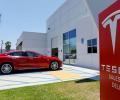
Union Minister Nitin Gadkari on Friday said he has asked US-based Tesla several times to manufacture its iconic electric vehicles in India, while assuring that all support will be provided by the government to the company. Addressing 'India Today Conclave 2021', Gadkari further said electric cars manufactured by Tata Motors are not less good than electric cars manufactured by Tesla. "I have told Tesla that don't sell electric cars in India which your company has manufactured in China.

'The scheme excludes tractors, light commercial vehicles, and medium and heavy commercial vehicles.'
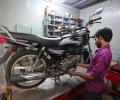
Hero MotoCorp (HMCL) saw strong volume performance in the first quarter of the current financial year (Q1FY25), but margins disappointed due to weak spare part sales and negative electric vehicle (EV) margins. The company hopes for a strong festive season due to better rural sentiment. Revenue grew 16 per cent year-on-year (Y-o-Y) to Rs 10,140 crore, operating profit was up 21 per cent to Rs 1,460 crore, and adjusted net profit grew 19 per cent Y-o-Y to Rs 1,120 crore.

Numeros Motors is also planning to come up with a passenger vehicle four-wheeler or a three-wheeler by 2027.
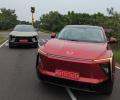
Test drives for these vehicles will start in a phased manner from January 24, and bookings will begin from February 14.

Given India's reliance on coal, electric vehicles could at best be 10% more efficient than petrol in terms of CO2 savings.

India stares at the risk of an influx of Chinese products as US tariffs on a range of Chinese goods, including solar panels, electric vehicles, lithium-ion batteries, syringes, and steel, are set to take effect from September 27. With higher tariffs reducing China's access to the US market, there is concern that China may divert its exports to other markets, including India, which could lead to potential dumping of goods. This situation could challenge Indian industries, particularly in sectors where competition with Chinese products is already fierce.

Recently, Suzuki Motor Corp (SMC) in an investor presentation expressed strong intent to enter the electric vehicle (EV) space. This is part of a larger strategy the Hamamatsu-based firm has drawn up in developing electrification of technologies as it seeks to achieve carbon neutrality. The significance of this presentation is that it marked the first time that the Japanese carmaker spelt out its EV strategy with well-defined timelines. SMC plans to develop electrification technologies by 2025, fully implement them in products from the same year, and make a full-scale quantitative increase from 2030.
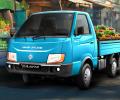
'This market for diesel starts at around Rs 6.3 lakh and goes up to Rs 7 lakh, and with Saathi we have our usual price set at Rs 6.5 lakh, so we are slightly on the lower side with a superior product.'

A single application and a plethora of services for passenger cars - that is what myTVS, a brand that operates under Ki Mobility Solutions and is part of the TVS family, is set to bring to customers, in a bid to disrupt the concept of "super apps" in India. Starting July 15, myTVS will launch its connected car platform or super app called myTVS Life360 for aftermarket passenger cars. Through it, customers will be able to avail themselves of a range of services like maintenance, diagnostics, roadside assistance, accessories, payments, insurance, and so on.

Two Japanese auto giants, Honda and Nissan, are moving towards a potential merger, but it remains unclear how their Indian operations will be immediately impacted.
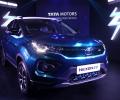
Powered by Ziptron technology, the electric SUV for the personal segment comes with a range of 312 km on a single charge and a high voltage system, fast charging capability, extended battery life and class leading safety features. Besides, it has 35 connected car features as well. The Nexon EV will be available in three trim levels across 60 authorised dealerships in 22 cities, the company said at the launch.
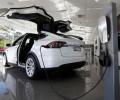
Sales of total electric vehicles in India are expected to be around 10 lakh units this year, equal to what was sold collectively in the last 15 years, mainly riding on the good traction witnessed by electric two-wheelers, Society of Manufacturers of Electric Vehicles (SMEV) said on Thursday. In 2021, the sales of electric two-wheelers (E2Ws) in the country jumped over two-fold at 233,971 units driven by a good traction of high-speed scooters as compared to 100,736 units in 2020, SMEV said in a statement. "We haven't seen better days than the last few months in the entire EV journey.

Amazon
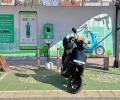
Leading Indian electric two-wheeler (e2W) companies have said that "swapping" of batteries is currently unviable and will only increase the cost for a consumer to run the vehicle.
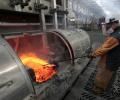
Novelis' Q3FY25 volume stood at 904,000 tonnes (down 1 per cent Y-o-Y, down 4 per cent Q-o-Q), due to lower VAP and automotive shipments. Revenue stood at $4.1 billion (+4 per cent Y-o-Y, down 5 per cent Q-o-Q).

Bajaj Auto is gearing up to launch clean-energy vehicles including another motorcycle powered by compressed natural gas (CNG), showcase ethanol-powered motorcycles and three-wheelers next month, as well as launch a new Chetak platform early next year, as it closes in on hitting 100,000 monthly sales from clean-energy vehicles this festival season. In an interview with CNBC-TV18, Bajaj Auto managing director Rajiv Bajaj said these initiatives were part of the firm's broader goal to achieve monthly sales of 100,000 clean-energy vehicles this festival season.
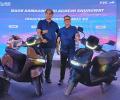
TVS Motor Company has relaunched its popular electric scooter, the TVS iQube, in Maharashtra with new variants and colours.

The most striking features of this Budget was its focus on simplification and improving the ease of doing business in India, asserts Kaku Nakhate.

With Kona catering for the high-end market, the South Korean automobile conglomerate wants to introduce a product in the EV segment to address the mass segment.

Chinese electric carmaker BYD is focusing on launching vehicles in the Rs 25-45 lakh price range in India even as it continues to evaluate customer preferences and demand in more affordable segments, its Head of Electric Passenger Vehicles in India Rajeev Chauhan told Business Standard.

Ola Electric will roll out its complete offering of electric scooters and motorcycles in each segment of the market - premium, mass premium, and economical - in the next 12 months in a bid to push for a near-full conversion of the two-wheeler market to electric in three years. According to Bhavish Aggarwal, founder and CEO of Ola Electric, "ICE (internal combustion engine) products will fall off a cliff." He also says the company is aiming to become profitable next year.

The BSA Gold Star is launched....Ola Enters e-motorbikes Biz... Bajaj, TVS To Enter e2Ws Market...
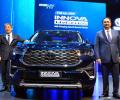
Hybrids have helped Maruti acquire leadership in SUVs, a segment that was never its forte. Toyota has also risen with the hybrid tide to clock its highest-ever annual sales in 2023.

India and the United States will finalize the contours, schedule of negotiations, and terms of reference for a proposed bilateral trade agreement (BTA) during a three-day meeting beginning Tuesday. The agreement is expected to be finalized in two tranches, with the first phase focusing on goods trade. The US team, led by Assistant US Trade Representative for South and Central Asia Brendan Lynch, will be in India from March 25-29 to discuss the agreement. Both countries are aiming to conclude the first phase of the agreement by fall 2025.

Automotive (auto) major Mahindra & Mahindra (M&M), which is readying to launch nine sport utility vehicles (internal combustion engine/ICE), seven Born Electric Vehicles (BEVs), and seven light commercial vehicles by 2030, has outlined an investment of Rs 27,000 crore in its auto business between 2024-25 (FY25) and 2026-27 (FY27). Over the next three years, the company will deploy Rs 37,000 crore, including its auto business, farm business (Rs 5,000 crore), and service business (Rs 5,000 crore).
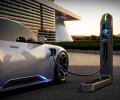
The question is: Will the company have a strong balance sheet to support this massive investment plan?

German luxury car maker Audi on Thursday launched three all-electric SUVs under its e-tron range with prices starting from Rs 99.99 lakh kicking off its electrification journey in the country. The three all-electric SUVs -- e-tron 50, e-tron 55 and e-tron Sportback 55 -- are priced at Rs 99.99 lakh, Rs 1.16 crore and Rs 1.18 crore respectively (all prices ex-showroom), Audi India said in a statement. Commenting on the launch of the e-tron brand in India, Audi India Head Balbir Singh Dhillon said, "we are launching not one, but three electric SUVs that begin our electrification journey." The three electric SUVs are "the perfect confluence of luxury, zero emissions, performance and everyday usability", he added.
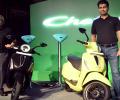
The two-wheeler giant had only 14 per cent of the electric two-wheeler market in May this year, but its 26.8 per cent in December

Major two-wheeler manufacturers in India witnessed a double-digit increase in domestic sales in October, driven by the festival fervour.
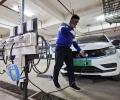
New Delhi's timing couldn't have been worse, both for India's fledgling electric vehicle (EV) sector and prospective electric bike buyers. It was hard to miss the perfect storm brewing for India's EV industry since early 2022. On one hand, you had several accidents involving battery fires that unnerved consumers; on the other, uncertainty had crept in over subsidies.

From Mumbai to Silvassa in Daman, and back.
